How to Remove a Stuck Light Bulb From a Ceiling Fan
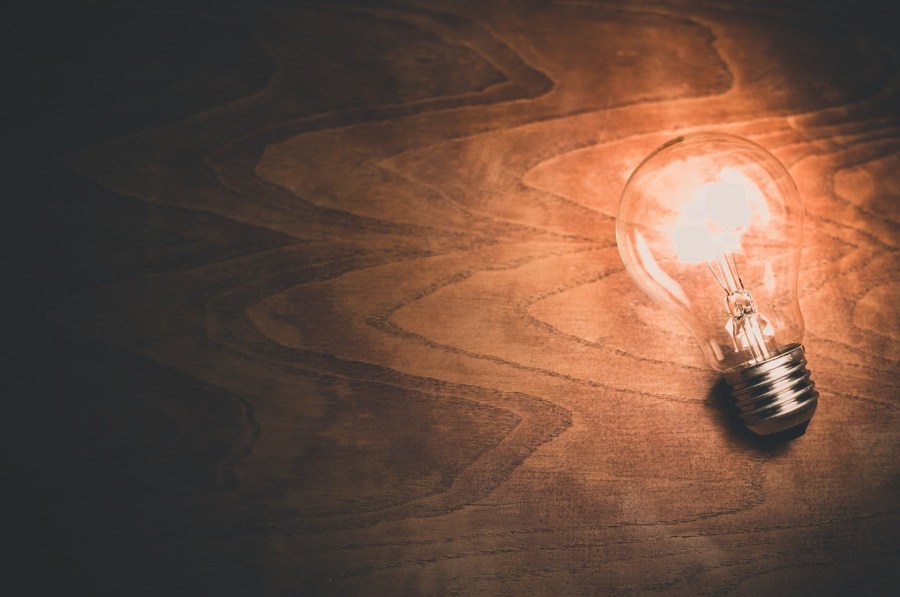
During the 1800s, many inventions revolutionized the US Government and the ma. One of these was the bulb. With the design of the light lightbulb, people began altering their homes with electricity and exploitation the light bulb instead of give the sack for night light. The effects of this invention were not all sure. With the lightbulb now being used more frequently, the brag companies were suffering, and gas stocks went down.
The new innovation of the light bulb also spurred the expansion of electrical power grids everywhere. The largest of these was first built in 1895 in Niagara Falls. At the time, this was the world's first office base. The light bulb brought roughly more inventions such as electrical appliances, the phonograph, and even other versions of the electric-light bulb.
The semipermanent effects on society were noticed. People were staying up advanced in the evenings because of the lighting they now had, cities became more ethnical in the evenings, and homes were safer right away that they weren't being lit and heated by discharge.
WHO Fictitious the Candescent Bulb?
Although Thomas Edison is attributable with the invention of the electric light in 1879, other inventors were functional on various designs to raise electrical energy or light. In the twelvemonth 1800, Alessandro Volta, an European nation inventor, was working on a way to render electricity. He used zinc and copper for this invention and, in the process, the copper cable would glow and acquire light.
Warren de la Rue studied a version of the electric-light bulb in 1840. His electric-light bulb used copper telegraph and a platinum strand, and it worked successfully. However, the toll of platinum was too high, preventing the invention from becoming a success. Joseph Swan was an English chemist that also came improving with this version of the lightbulb in 1850. His was made with a carbonized paper filament but didn't accept the engineering to make the air pump of the bulb to mold efficiently.
Edison discovered what the proceeds was with Swan's design and came up with an innovation that used a dilutant filament that made the bulb operate more efficiently. Thomas Alva Edison's version of the light electric-light bulb was considered a achiever in 1879 and, by 1880, helium based his own electric company called Thomas Alva Edison Galvanic Illuminating Company of New York.
H ow Does a Light Medulla Work?
When Edison designed the archetypal light medulla oblongata, it worked with the power of electricity. The electricity traveled through a glass vacuum bulb to a soft platinum filament to provide the light. The vacuum of the shabu bulb would decompres the melting of the fibril. This bulb would lonesome last a few hours before burning unfashionable.
Today, the light bulb is designed very differently. The metal base at the buttocks of the bulb has two metal contacts to connect to an electric circuit. Two wires travel from the metal contacts to a boney metal filum in the center of the bulb. The glass bulb that surrounds the wires and filament contains an inert gas, unremarkably argon. When an physical phenomenon current powers the electric light, the energy travels through the wires to the filum to create light. The modern-day light bulb, in more scientific terms, radiates light by a chemical reaction betwixt positively and negatively charged atoms.
T he Other Types of Light Bulbs
The incandescent light bulb was the premiere one order into use of goods and services for the informal home. Today, thither are fluorescent lamps, compact fluorescent lamp (CFL) bulbs, halogen bulbs, and light-emitting diode (LED) bulbs.
I ncandescent Bulbs
This bulb wont to comprise the most commonly used in homes and other buildings. This medulla oblongata operates a bit otherwise than the primary invented by Edison. It brings light by passing a up-to-date through wires to a tungsten filament, which provides a glow. These bulbs let a life of about 700 to 1,000 hours.
F luorescent Bulbs
These bulbs are tubes made up of gases, such as mercury. The light works by an electric current road from cathodes happening the ends of the bulb to the gases, which radiate energy. The tubes have a P coating, which takes the energy and converts information technology to light up. The fluorescent bulbs last longer just contain gases, so they need to be disposed of in a special way.
C FL
CFL bulbs are more vitality-efficient than an incandescent lightbulb and last about 10,000 hours. Many homes replaced their incandescent bulbs with CFLs. These bulbs are a spiral shape and operate with the same technology as the fluorescent tubes.
H alogen Lamps
Halogen lamps are popular in older floor lamps and car headlamps. These are often more efficient and compact than an incandescent bulb. Halogen lamps control with a tungsten filament that is surrounded by a obvious case. The bulb is full with an inert gas and halogen, which increases the life and brightness of the light.
L ED
LED bulbs are the most favourite found in homes and buildings all around the reality. These bulbs come in a variety of light colors and are a top choice imputable their energy efficiency. The Light-emitting diode bulb kit and boodle aside an electric current itinerant to a charged rectifying valve, which creates a flow of electrons and protons.
How to Remove a Stuck Light Bulb From a Ceiling Fan
Source: https://www.reference.com/history/did-light-bulb-change-world-674f0957107c4c65?utm_content=params%3Ao%3D740005%26ad%3DdirN%26qo%3DserpIndex

